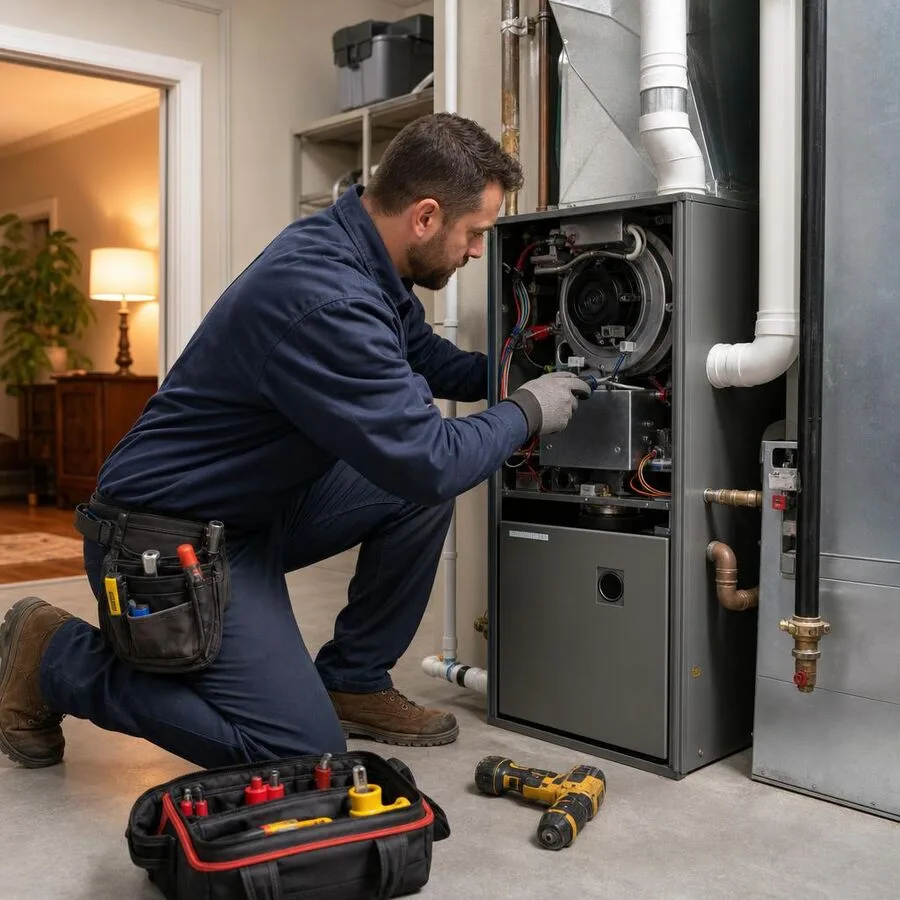
Furnace Installation
Planning in the Bay Area
Explore furnace installation, replacement, and heat pump options across San Francisco, San Mateo, Alameda, Contra Costa, and Santa Clara counties.
Clear project questions. Practical equipment guidance. Free estimate requests.

Bay Area Furnace Installation: Start with the Right Questions
Replacing a furnace is a whole-home decision, not just an equipment purchase. The right plan considers heating load, ductwork, venting, controls, access, local permit requirements, and the way your household uses each room.
This page gives Bay Area homeowners a practical overview of system types, proposal questions, planning steps, and service-area coverage. For a deeper walkthrough of sizing, equipment, permits, and installation steps, see the complete furnace installation guide.
Furnace Installation Options to Explore
Use these topics to identify the equipment and installation considerations you want addressed in a project-specific proposal.
Gas Furnace Installation
Equipment matched to your project scope
Compare standard, two-stage, variable-speed, and high-efficiency gas furnace options with the venting, ductwork, and controls your home needs.
Furnace Replacement
A clear scope before work begins
Plan the removal of an existing system and evaluate equipment compatibility, duct condition, access, venting, and permit needs before selecting a replacement.
Heat Pump Systems
Heating and cooling in one system
Explore all-electric heat pump options that can provide both heating and cooling, with an honest comparison of comfort, infrastructure, and operating considerations.
High-Efficiency Upgrades
Compare equipment and whole-home factors
High-efficiency equipment can change comfort and energy use, but the benefit depends on sizing, installation quality, ductwork, climate, and how the system is operated.
New Construction Installation
Start with a complete system plan
For a new home or ADU, start with a heating-load calculation and a coordinated plan for equipment, duct routing, electrical service, and local approvals.
Urgent Replacement Planning
Talk through the next practical step
If your current system has failed, call to discuss the project scope and scheduling options. Equipment availability and required work determine the timeline.
Furnace System Features Explained
Equipment capabilities vary by model, fuel source, home layout, and local requirements. Use this overview to frame the questions you want answered in a project-specific proposal.
80% AFUE Furnace
A single-stage burner typically operates at one firing level when it is on. It is a simpler configuration to compare when evaluating basic replacement options.
Two-Stage Furnace
Two-stage furnaces can operate at more than one capacity. Their suitability depends on the home, ductwork, controls, and the specific equipment model.
Variable Speed Furnace
Variable-speed blower motors can adjust airflow as the system operates. Ask how the equipment and compatible controls are expected to perform in your specific home.
Modulating Furnace
Modulating furnaces vary output in smaller increments than single-stage systems. Compare the exact model and expected operation rather than relying on a feature name alone.
Communicating Furnace
Communicating systems can link compatible equipment and controls. Confirm which components are compatible and what data, diagnostics, or setup features are included with the quoted system.
High-Efficiency Furnace
Condensing furnaces can carry higher AFUE ratings and may require condensate drainage and specific venting. Compare installed cost, operating expectations, and maintenance needs for the actual model.
Low-NOx & Ultra Low-NOx Furnace
Low-NOx furnaces are designed to reduce nitrogen-oxide emissions. Requirements can vary by air district, equipment type, and installation date, so verify the current rule for your address with the relevant authority before choosing a model.
Single & Multi-Zone Furnace
A furnace can be paired with multiple independently controlled zones through compatible dampers and controls. A full system assessment can identify whether zoning is practical for a particular layout.
How to Compare Furnace Installation Proposals
A useful proposal explains the exact equipment and work included—not just a single total. These questions help you compare options and make an informed decision.
- A project-specific scopeEquipment, access, ductwork, venting, and controls should be discussed before a proposal is finalized.
- Free estimate requestsStart with the information needed to understand your home and goals.
- Clear proposal questionsAsk what is included, what is excluded, and who handles permits, inspections, and warranty registration.
- Local requirements consideredPermit and equipment requirements vary by jurisdiction and should be confirmed for the property.
- Scheduling discussed upfrontA practical timeline depends on the existing system, equipment availability, and any required approvals.

Brands to Compare
Request a Free Quote
Tell us about your project and we’ll follow up to discuss availability.
Quote Request Received!
We’ll follow up about your request. If it’s urgent, call us at (510) 937-3808.
What Shapes a Furnace Installation Quote?
A furnace installation quote is specific to the home and selected equipment. The best way to avoid an apples-to-oranges comparison is to ask for the same details from every contractor.
- Equipment type, capacity, efficiency, and controls
- Heating-load calculation, ductwork condition, and access
- Venting, gas-line, electrical, or condensate work
- Permit and inspection requirements in the local jurisdiction
- Warranty options, removal, and disposal scope
Before approving work, confirm the proposal lists the model number, work scope, exclusions, permit responsibility, and warranty information.
A Typical Installation Planning Process
- 1Discuss the home and goalsShare the existing system, comfort concerns, project timing, and any known ductwork or access constraints.
- 2Assess the installation scopeA complete assessment considers heating load, equipment location, ductwork, venting, electrical service, and controls.
- 3Review a written proposalCompare model numbers, scope, permits, exclusions, warranty terms, and the schedule before authorizing work.
- 4Coordinate required approvalsConfirm permit and inspection responsibilities with the contractor and the appropriate local authority.
- 5Review the completed systemAsk for operating guidance, manufacturer documentation, warranty information, and any final inspection records.
A Simple Checklist Before You Choose
Use these questions to make a more confident, well-documented decision.
Get the exact model
Ask for the manufacturer, model number, efficiency rating, and controls—not only the brand name.
Understand the scope
Confirm whether the price covers removal, ductwork, venting, electrical work, permits, and disposal.
Check local requirements
Clarify which permits or inspections apply to the property and who coordinates them.
Keep the documents
Save the proposal, warranty details, manuals, and any inspection records with your home files.
Frequently Asked Questions
Common questions about furnace installation in the Bay Area
How much does furnace installation cost in the Bay Area?
How long does a furnace installation take?
Do I need a permit for furnace installation in California?
What size furnace do I need for my Bay Area home?
What's the difference between gas, electric, and heat pump furnaces?
What furnace brands should I compare?
Does furnace installation in California qualify for rebates or tax credits?
What is a low-NOx furnace and is it required in the Bay Area?
How do I know if I need a new furnace or just a repair?
Can you install a furnace if I don't have existing ductwork?
What's included in the installation price? Are permits and removal extra?
Serving Communities Across the Bay Area
Explore the counties and communities listed in our service area, then contact us to discuss project scope and availability for your address.
Not sure if we serve your city? Call (510) 937-3808 — we'll let you know right away.